
The short answer is: earlier than most people think.
Ideally, an interior designer should be involved before construction begins, before furniture is purchased, and before important technical decisions are made. The early stages are when the layout, electrical and plumbing plans, lighting, flooring, materials, and custom-made furniture are defined—elements that can be difficult or expensive to change later.
Good interior design does not begin with choosing decorations. It begins with carefully planning the space and considering how it will be used every day.
Before Construction or Renovation Begins
The best time to hire an interior designer is while there is still enough flexibility to make changes.
For a new-build property, a designer can review the floor plan and suggest more functional solutions before the final positions of partition walls, doors, electrical wiring, and plumbing are determined. Sometimes, even a small change to the position of a wall or doorway can significantly improve the organisation of an entire room.
For a renovation, it is best to involve a designer before demolition and construction work begin. This allows the following elements to be planned in advance:
- furniture layout and circulation space
- positions of sockets and switches
- lighting fixtures and electrical outlets
- plumbing and electrical installations
- floor and wall finishes
- custom-made furniture
- materials, colours, and finishes
When these decisions are made on time, contractors receive clearer instructions, and the likelihood of unexpected changes during construction is significantly reduced.
Before Requesting Quotes from Contractors
A common mistake is to contact contractors first and only then begin thinking about the final appearance and functionality of the space.
Without a clearly defined design, it is difficult to obtain accurate and comparable quotes. One contractor may include certain work and materials in the price, while another may leave them out. As a result, the initial quote often does not reflect the true overall cost of the project.
When a clear concept design and appropriate technical documentation are available, it becomes much easier to define the scope of work, plan the budget, and compare quotes accurately.
Before Planning Electrical and Plumbing Installations
The positions of electrical and plumbing installations depend on the final layout of the space.
Before deciding where sockets should be placed, for example, you need to know the positions of the television, desk, bedside tables, kitchen appliances, and lighting. In the bathroom, the locations of sanitary fixtures, taps, the shower, mirror, and storage units must be defined in advance. In the kitchen, almost every connection depends on the precise layout of the cabinetry and appliances.
If these installations are completed before the interior has been properly designed, they may need to be relocated later, resulting in additional costs or compromises that affect both the functionality and appearance of the space.
Before Purchasing Furniture and Materials
Hiring an interior designer can also be worthwhile when no major construction work is planned.
Buying individually beautiful pieces of furniture does not necessarily mean that the finished space will look cohesive. A sofa may be too large, a dining table too small, a rug incorrectly proportioned, or the tones of different materials may vary more than they appeared to in the showroom.
An interior designer considers the space as a whole: its proportions, distances, colours, textures, lighting, and the visual connection between rooms. Every decision is therefore made within a clearly defined concept, rather than building the interior through a series of unrelated purchases.
When You Still Do Not Know Exactly What You Want
You do not need to have a clearly defined style before your first conversation with an interior designer.
It is enough to understand how you would like to live in the space, what bothers you about your current home, and the kind of atmosphere you would like to create. Images of interiors you like can be helpful, but the designer’s role is to translate your wishes, habits, and practical needs into a functional and visually cohesive solution.
A professional interior design project is not about copying a single inspirational image. Its purpose is to create a space tailored specifically to you, its architecture, and your way of life.
Signs That You Should Not Wait
It may be time to speak to an interior designer if:
- you are unsure where to begin
- you have many ideas but do not know how to bring them together
- you find it difficult to assess furniture dimensions and proportions
- you are planning to remove or reposition walls
- electrical or plumbing installations need to be changed
- you are ordering a kitchen, wardrobes, or other custom-made furniture
- you would like to see how the space will look before work begins
- you want greater control over the budget and sequence of decisions
- you do not have enough time to coordinate every detail
The more complex the project, the more important it is to involve an interior designer at an early stage.
Is It Ever Too Late?
An interior designer can still become involved after construction has begun, but there will be less flexibility. Some decisions may still be improved, while others could require completed work to be repeated, resulting in additional costs.
If the space has already been completed, a designer can help with the selection of furniture, colours, lighting, textiles, and decorative elements. However, the best results are usually achieved when the functional, technical, and aesthetic aspects are planned together from the very beginning.
How Far in Advance Should You Contact an Interior Designer?
For a complete interior design or renovation project, it is advisable to make contact several months before the planned start of construction.
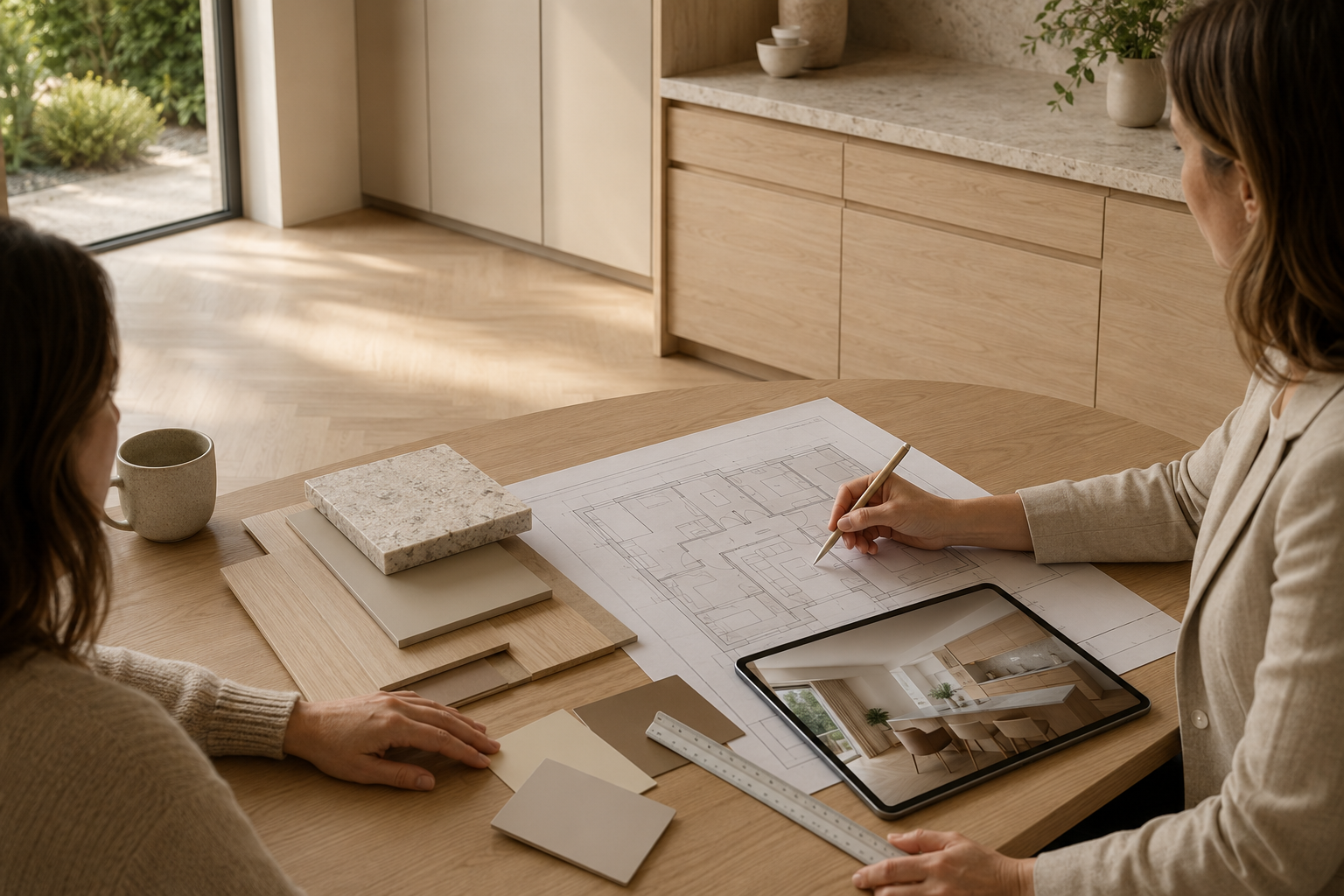
Time is needed to discuss your requirements, measure the space, develop the concept design, prepare 3D visualisations, select materials, and produce the necessary project documentation.
Interior design is a process in which decisions are gradually explored, evaluated, and coordinated. Allowing enough time leads to a better result, a calmer preparation phase, and fewer improvised decisions during construction.
A Successful Interior Begins with a Good Plan
Hiring an interior designer is not reserved exclusively for large or luxurious projects. Professional guidance is particularly valuable when you want to make the best use of the available space, avoid expensive purchasing mistakes, and make decisions that will support your lifestyle in the long term.
The right time to hire an interior designer is therefore not when a problem appears, but before decisions are made that will be difficult or costly to change later.
Are you planning to build, renovate, or completely redesign your home? Studio Ideja can help you create a functional, cohesive, and timeless interior—from the first idea to a clearly developed design plan.